Boats built for work
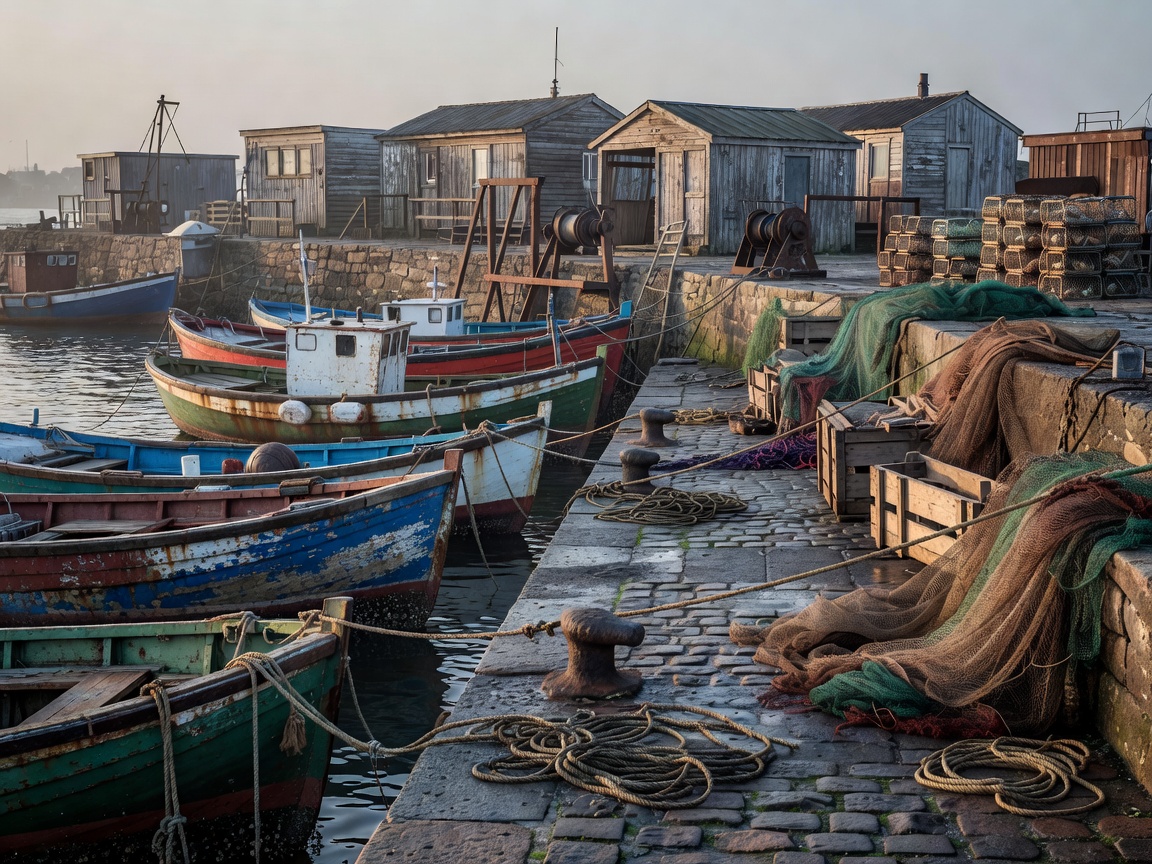
Fishing vessels are working tools shaped by the species pursued, the conditions faced and the methods used. Their hulls, decks, gear and onboard equipment are arranged around tasks that may be invisible from the shore. Nets, pots, lines and winches each point towards different fishing practices; a vessel’s appearance alone is not enough to identify its work with certainty. Weather, tides, maintenance and the safe handling of catch all influence when and how a boat operates.
Harbour infrastructure supports this labour. Quays provide working edges; slipways allow vessels to move between land and water; moorings, fuel access, ice, stores and repair facilities help keep boats working. Some infrastructure is privately operated or restricted, and a public waterfront walk does not grant access to every pier, yard or landing area. Follow signs and barriers, keep clear of vehicles and equipment, and give crews space to complete tasks.
From landing to market
When catch comes ashore, it enters a chain of handling, sorting, chilling, transport and sale. Fish auctions are one form of trade, but the arrangements differ by port and market. Some sales are conducted through established auction systems; other supply routes use direct transactions or wider distribution networks. Visitors should not assume that an active-looking market is open to the public. Confirm visitor access in advance, and remember that buying and landing areas are workplaces with hygiene and safety requirements.
Terms such as landing, catch, gear, quay, berth and auction have practical meanings. A landing is the bringing ashore of catch; a berth is a vessel’s allocated or regular place alongside; gear describes the equipment used to fish. Local usage may vary, but learning the vocabulary helps a visitor observe more accurately than relying on romantic shorthand about “old sea ways”. Fishing has changed with regulation, markets, technology and environmental conditions, and maritime heritage is a living subject rather than a frozen tableau.
Trades around the waterfront
Fishing communities rely on a web of maritime trades. Vessel maintenance, net mending, engineering, chandlery, transport, fish handling and market work may all contribute to a port’s economy. Some trades are visible in sheds and workshops; others take place in less public settings or connect the harbour to inland supply routes. Their presence can shape the waterfront even when visitors see only a brief slice of a working day.
North Sea fishing communities have long been part of Britain’s coastal story, as have communities around the south-west and Scotland’s west coast. Each region has its own histories and present-day conditions. No single harbour can stand for all fishing life, and a place’s appearance should not be mistaken for a full account of its economy. Local museums, interpretation and public heritage material can add context where available, but current activity is best understood through reliable, up-to-date sources.
Harbour or marina?
A working harbour may include fishing vessels, cargo activity, service craft or several overlapping uses. A marina is primarily arranged for recreational boating, with berths and facilities designed around leisure craft. The distinction can blur in a mixed waterfront, where fishing and visitor boats share waters or neighbouring quays. Look at the kinds of activity, equipment and access arrangements rather than assuming every mooring basin serves the same purpose.
This distinction matters to accommodation as well. A room overlooking active landing space can bring early engines, reversing alarms, loading and changing light into view and hearing. A marina-facing stay may offer a different soundscape, though leisure activity also varies. Neither setting is inherently better; each asks for different expectations about quiet, access and the meaning of a waterfront view.
Observe without turning work into theatre
Visitors can appreciate fishing culture by watching from public spaces, reading harbour notices, supporting local museums and listening to information provided by people who choose to share it. Avoid blocking routes for a photograph, touching equipment, entering restricted areas or treating workers as part of a scenic performance. Ask before photographing identifiable individuals and respect a refusal without pressing.
Working communities are not a visitor attraction simply because their labour is visible. A considerate stay recognises that the harbour’s first purpose is not to entertain guests. Give the waterfront room to function, and let curiosity be patient. That approach brings a more truthful understanding of boats, trades and maritime heritage—and a better sense of how accommodation sits within the everyday life of a coastal place.