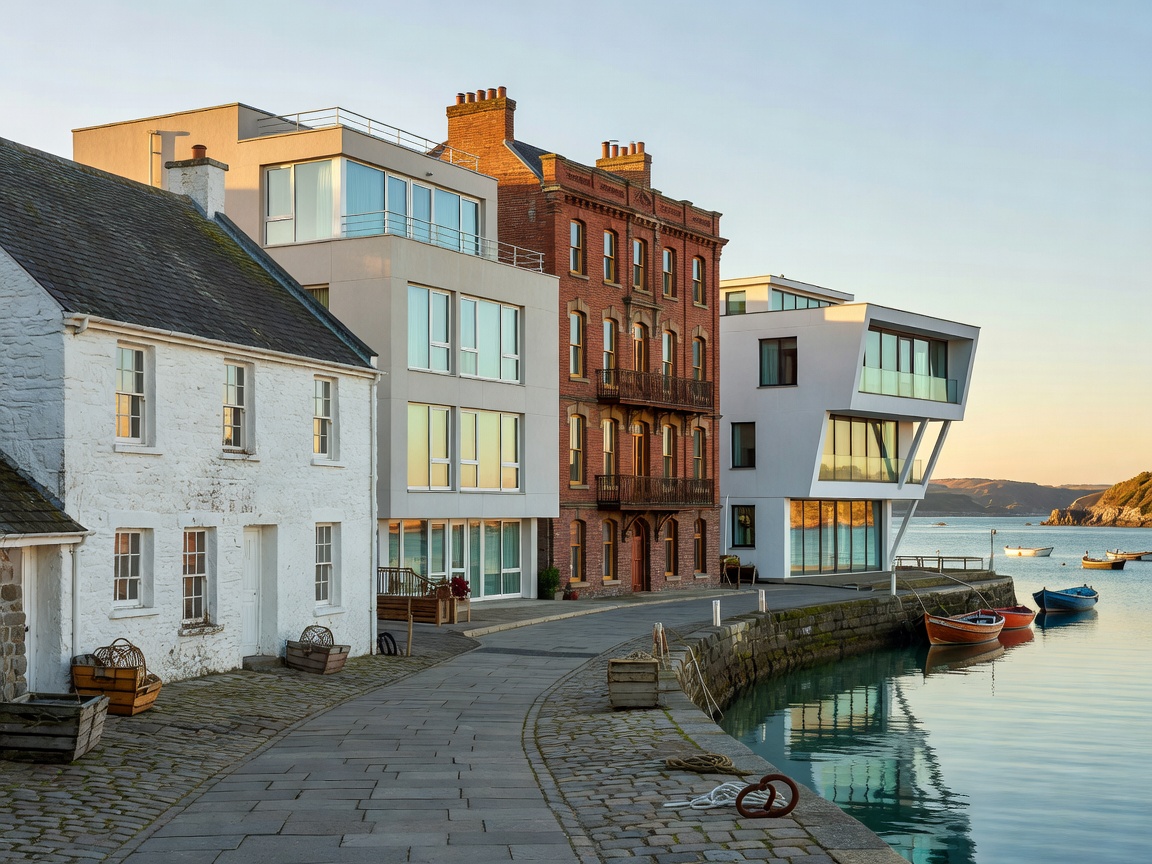
Traditional coastal inns
An inn can offer a close relationship between food, lodging and the life of a town. Older buildings may carry the proportions and materials of their original use: deep window reveals, compact staircases, irregular floors or rooms arranged around a public ground floor. Such character can be appealing, but it can also bring practical trade-offs. Stairs, narrow corridors and older layouts may affect step-free access, luggage handling and privacy. Ask about the specific room and facilities rather than assuming that age guarantees atmosphere or comfort.
Inns close to a quay can make harbour walks and local dining easy to reach. Their central position may also bring evening voices, morning deliveries or the sound of activity outside. The actual experience depends on street layout, glazing, room orientation and seasonal patterns. A building’s historic appearance does not reveal its sound insulation or accessibility; look for clear information and ask direct questions.
Guesthouses and smaller stays
Guesthouses often have a more intimate scale and may occupy a converted house or a small building near the centre. They can suit visitors who value a residential feel and a personal point of contact. Facilities and services vary widely, so compare what is actually offered: breakfast arrangements, shared spaces, luggage storage, late arrival procedures and accessible features. Do not assume a smaller place is automatically quieter, more personal or better connected to local food.
Some guesthouses sit on steep lanes above the waterfront or in quieter residential streets. That position can create a pleasant pause from the quay while adding steps to everyday journeys. A map may not show gradients, cobbles or uneven paving. If walking conditions matter, ask about the route from transport stops and the most direct step-free approach.
Converted waterfront buildings
Warehouses, merchants’ premises and other waterfront buildings can be adapted for accommodation, giving a stay a strong sense of place. Original stone, brick, timber or industrial proportions may remain, while later changes bring modern services into the structure. Conversion is not one uniform style: some buildings retain a robust, workmanlike character; others are substantially reconfigured. Look for accurate descriptions of what is original and what has been renovated rather than relying on a generic heritage label.
These buildings may be immediately beside active harbour space. The reward can be a close view of changing water and boats moving through the day; the compromise may be public foot traffic, operational noise or restricted access nearby. Views also depend on direction and neighbouring buildings. Confirm whether a room faces the quay, an inner courtyard or a street, and consider whether a waterside position is worth the reduced privacy it may entail.
Harbour-facing and contemporary accommodation
A harbour-facing hotel may make the waterfront legible from a window, lounge or dining area. A clear outlook can be atmospheric as weather and tide alter the surface, but a view alone says little about noise, walking access or the character of nearby streets. More contemporary coastal accommodation may prioritise simpler circulation, modern facilities and flexible shared spaces. The style can feel calmer and more accessible, although its setting may be farther from historic lanes or market activity.
Directly beside a working harbour is different from being near one in a broad marketing sense. A property farther inland can offer privacy and a quieter night, while adding a walk or transport journey to reach the quay. Consider the whole daily pattern: breakfast, evening meals, market visits, ferry or bus connections and the route back after dark. No building type solves every preference.
Compare qualities, not labels
For atmosphere, ask what materials, room arrangements and shared spaces shape the stay. For access, check step-free entry, lift provision, bathroom details and the route to public areas. For privacy, consider room orientation and proximity to public paths. For food, distinguish on-site facilities from nearby independent choices. For transport, verify the distance to stops, parking information and local connections.
Accommodation style is most useful as a set of questions, not a ranking. A traditional inn can be full of character yet unsuitable for someone who needs level access; a contemporary building can be practical but less connected to the older waterfront; a converted quay building can feel deeply rooted yet bring harbour activity close to the room. Match the building’s real qualities to the way you want to experience the coast.